Key Points
- Sterile processing technicians clean, inspect, sterilize, and assemble surgical instruments so they are ready and safe for patient procedures.
- The national median pay is $47,700 a year, about $22.93 an hour, with roughly 7% projected job growth, faster than the average across all occupations.
- Most programs run three to four months online or hybrid, among the shortest routes into a clinical setting with a recognized credential.
- The main credential, the CRCST, gives provisional status after the written exam, and full certification requires 400 hands-on hours within six months.
- Only eight states legally require certification to work, so in the other 42 the credential is preferred rather than mandatory.
What Sterile Processing Technicians Do
Sterile processing technicians prepare the instruments, devices, and equipment that surgical and procedural teams rely on across a hospital. The work happens in a sterile processing department, sometimes called central service or central sterile supply, away from direct patient care.
A typical shift covers:
- Decontaminating used instruments returned from operating rooms and procedure suites
- Inspecting and testing instruments for function and damage
- Assembling instrument trays for specific surgical cases
- Operating steam, ethylene oxide, and other sterilization systems
- Running biological and chemical indicators to confirm sterilization worked
- Tracking inventory and documenting every load and tray for a chain-of-custody record
Most technicians work in hospitals, ambulatory surgery centers, dental surgery groups, and large outpatient clinics.
The Two-Stage Sterile Processing Certification Path
Certification is a two-stage process, and understanding both stages before you pick a program saves you from a common surprise.
Stage one is the written exam, and two credentials are recognized:
Stage two is the hands-on requirement. To convert a provisional CRCST to full certification, HSPA requires 400 hours of hands-on experience in a sterile processing department within six months of passing the written exam. Programs cover the exam content, and the 400 hours happen afterward in a paid or volunteer role. Provisional status lets you apply for entry-level jobs, complete the hours on the job, and submit them before the six-month window closes.
Certification is legally required to work in only eight states: Connecticut, Delaware, Florida, Massachusetts, New Jersey, New York, Pennsylvania, and Tennessee. In the other 42, most hospitals prefer the credential but do not require it by law, which changes how you sequence training, the exam, and your job search.
Sterile Processing Technician Salary and Job Outlook
The national median wage is $47,700 a year, about $3,975 a month or $22.93 an hour, under the occupation category of medical equipment preparers that includes sterile processing technicians (BLS, May 2025). BLS also projects roughly 7% job growth, faster than the average for all occupations, and you can see a state-by-state breakdown to compare your area.
The wage sits in the middle of allied health support roles with similarly short training. Surgical technologists, who work alongside surgeons in the operating room, earn a higher national median. Phlebotomists and dental assistants tend to land at or slightly below the sterile processing median. In practice, sterile processing trades operating-room presence and patient contact for consistent, indoor work.
Wage growth depends mostly on shift differential, since overnight and weekend work often adds 10% to 15%, along with years of experience and certification status. Travel sterile processing roles pay higher rates in some markets because of facility staffing shortages.
If the pay and timeline work for you, compare sterile processing classes near you to see local start dates and formats.
How Long Training Takes and What It Costs
Most sterile processing programs run three to four months in online or hybrid formats, and self-paced options let motivated students finish faster or stretch the schedule around a job. In-person programs, which are less common, usually run 12 to 16 weeks on a fixed schedule.
Tuition generally runs from about $2,900 to $4,000 for online programs, with programs that bundle the certification exam fee sitting at the higher end. Externship support, where the school helps place you at a clinical site for your 400 post-exam hours, is a real advantage because you would otherwise arrange those hours yourself. If cost or speed is the priority, line up the cheapest and fastest sterile processing programs by timeline and price.
Funding varies by program. Some partners accept WIOA funding, MyCAA for military spouses, and Department of Defense Credentialing Assistance for service members. The math is favorable: roughly $2,900 to $4,000 in tuition against a national wage above $47,000 once you are working.
Pros and Cons of Being a Sterile Processing Technician
Pros
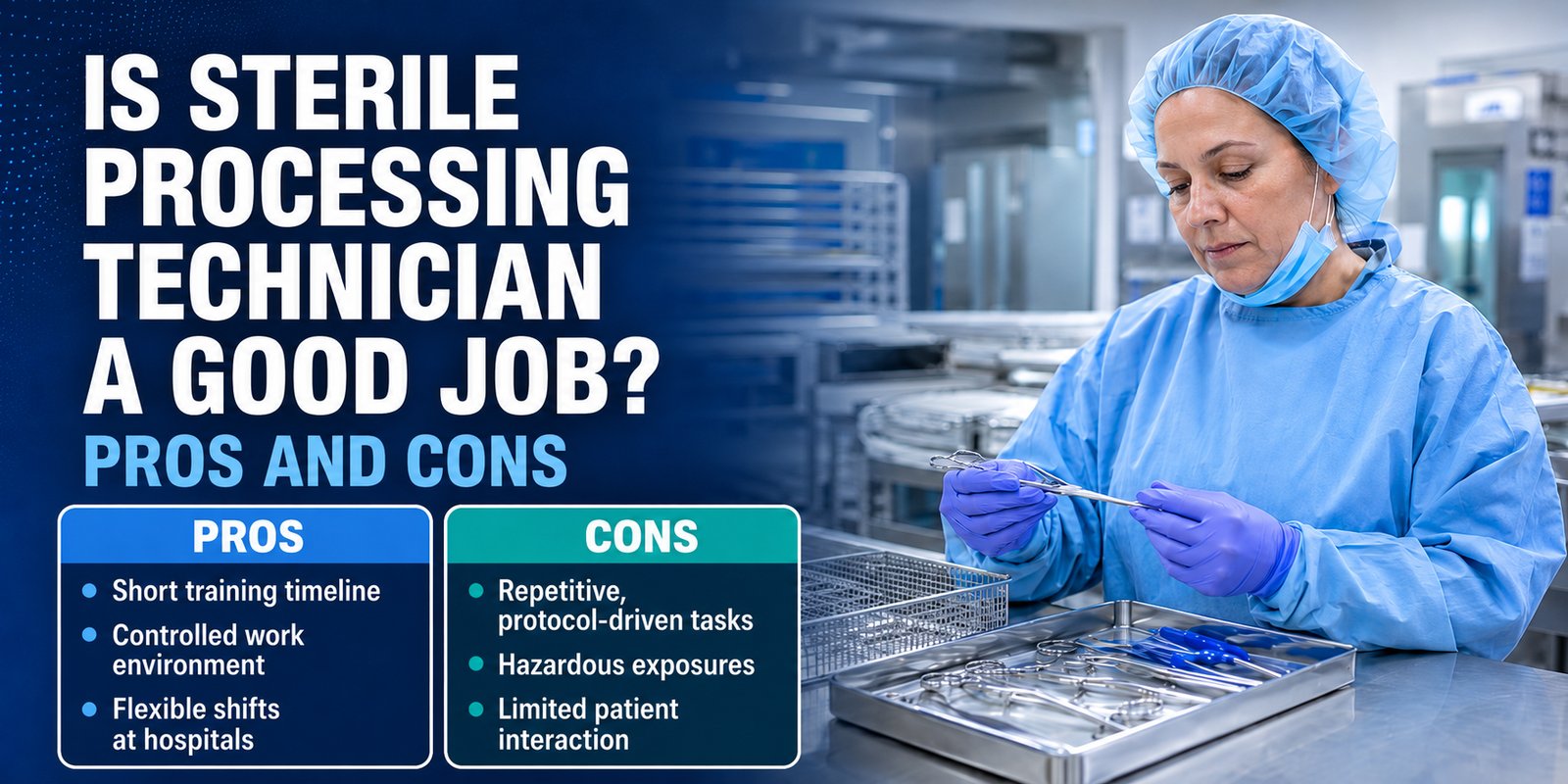
- Short training timeline. Programs run three to four months, reaching a nationally recognized credential faster than most healthcare paths.
- Steady demand across hospitals, surgery centers, and outpatient facilities, backed by roughly 7% projected job growth.
- Indoor, low-exposure setting. The department is climate-controlled and shielded from most direct patient contact.
- Clear advancement paths. Lead technician, supervisor, and manager roles are common next steps, and some technicians move into surgical technologist training.
- Flexible shifts at hospitals. Departments often run 24/7, so evening, overnight, and weekend shifts with differential pay are usually available.
- Lower up-front cost than most allied health paths, typically about $2,900 to $4,000 for online programs.
Cons
- Physical demand. Long hours standing, lifting trays, and repetitive hand and arm motion make musculoskeletal strain a documented risk without consistent body mechanics.
- Limited patient interaction. The role stays out of patient view, so anyone drawn to bedside or direct-care work will find it isolating.
- Repetitive, protocol-driven tasks. Some find the consistency calming, while others find it monotonous over time.
- Hazardous exposures. Chemical detergents, sterilization agents including ethylene oxide, and sharp contaminated instruments are routine, so PPE and procedure adherence are not optional.
- Pay below several adjacent roles. Surgical technologists, registered nurses, and dental hygienists all earn higher national wages.
- The 400-hour requirement adds time. Full CRCST needs 400 hands-on hours within six months of the written exam, completed after the program in a paid or volunteer role.
Who Is Sterile Processing a Good Fit For?
Sterile processing tends to fit well if:
- You want into healthcare without a multi-year program or heavy debt
- You prefer working away from the bedside in a quiet, indoor setting
- You handle detail-oriented, protocol-driven tasks well and value consistency
- You are comfortable on your feet for full shifts and hands-on physical work
- You see it as a stepping stone to a role like surgical technologist or surgical first assist
It is probably not the right fit if:
- You want regular daytime, Monday-to-Friday hours at a large hospital, since departments often run 24/7
- Direct patient interaction is central to your job satisfaction
- You need the wage to cover a higher cost of living without overtime, shift differential, or a move into supervision
- You want a variable or creative work environment
Sterile Processing Programs on Dreambound
Dreambound lets you compare vocational programs across the United States by format, length, and cost. Because the 400 post-exam hours trip up the most people, check whether each program includes externship support that places you at a clinical site or leaves those hours for you to arrange. These four partners cover the common formats and price points:
- Format: Online
- Prepares you for the CRCST Provisional or CSPDT exam
- Hands-on hours for full CRCST are completed outside the program